Dmitri Tonitsoi, 2025
Mental Fitness App Purchase and Onboarding
Positive Intelligence helps companies keep their workforce happy. The heavy B2B focus, however, made the company overly reliant on large, highly customised contracts with big enterprises. My goal was to automate onboarding and purchase funnels to mitigate this.
Company Location
San Francisco, California
Founded
2012
Industry
Mental Fitnesss
Annual Revenue
$10-20 million
Company size
50-100
Challenge
Purchasing the Mental Fitness Program for a team of 5–20 employees was unnecessarily difficult. There was an automated process for single-participant programs, and manual handling for large programs with 50–200 participants. But for anything in between, the single-user flow was inadequate, and the manual process didn’t have the capacity.
Results
I designed a family of purchase flows, ultimately finding the optimal balance between the flexibility of manual processing and the zero-labor, instant nature of a digital product.
In this case study, I will explain how the core of the product—the Form Builder and the Enrollment Form—were designed.
The solution covered the entire journey: from multiple entry points on the website, through a streamlined three-step onboarding form, to automated activation emails that delivered a custom mental fitness program for groups of 3–25 people.
Research & Analysis
I looked at the enrolment types, modules, and user actions.This helped define the universal logic that would let the same flow handle B2C, B2B, and Coach enrolments without breaking. The following are the main connections I found from studying the manual enrolment.
Customer type ↔ Enrolment modules
Each type (B2C, B2B, Coach) triggered different modules and default tags.
Payment logic ↔ Content access
Price, discounts, and payment mode determined which content modules were automatically unlocked.
Timezone ↔ Pod formation
Timezones and participant caps directly affected how user groups (“pods”) could be created and scheduled.
Start date ↔ Communication templates
Enrolment start dates dictated which automated emails and sequences were triggered.
Coach assignment ↔ Email visibility
Coaches were optionally included in B2B email flows depending on their group linkage.
Enrolment status ↔ Dashboard visibility
Coaches were optionally included in B2B email flows depending on their group linkage.
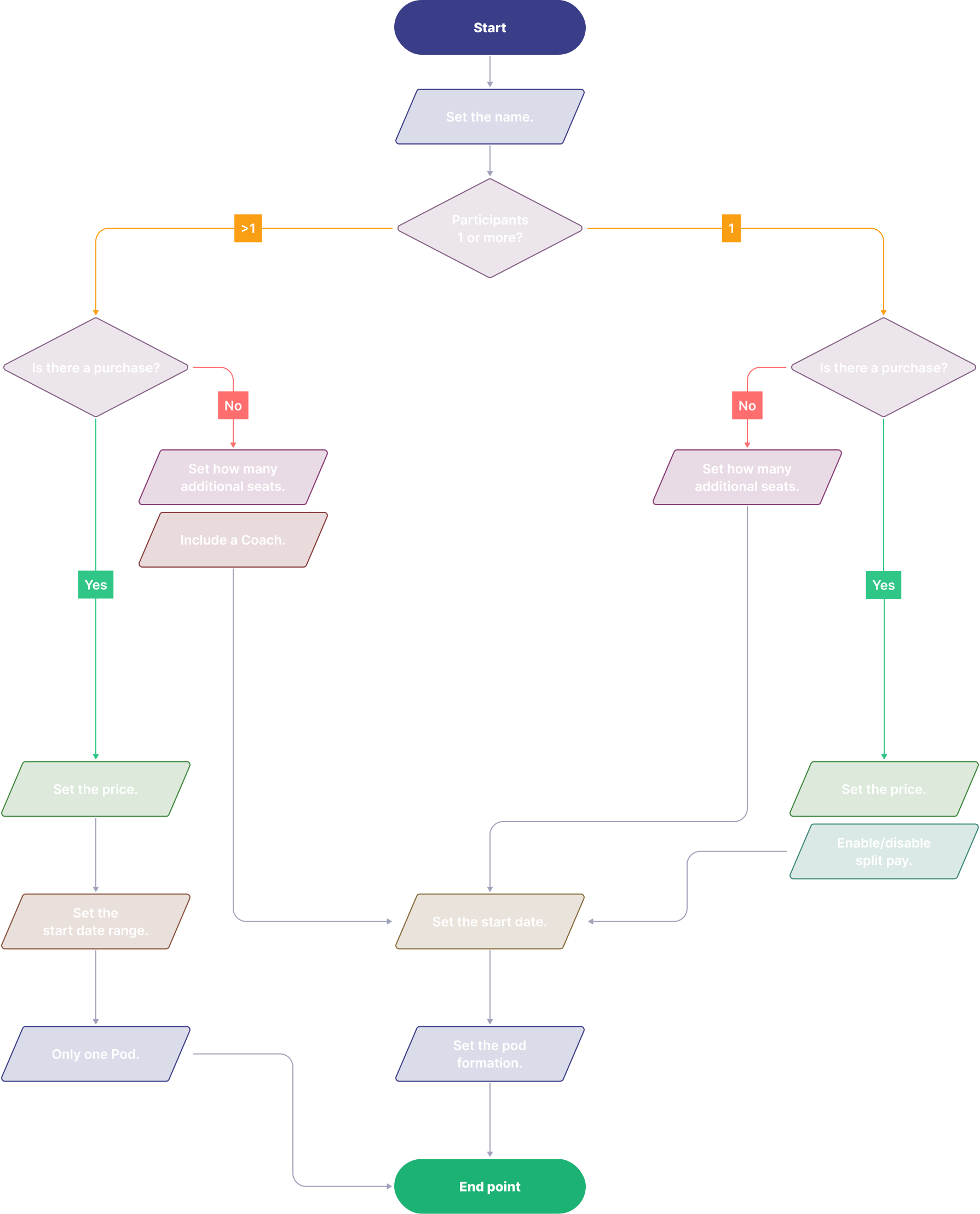
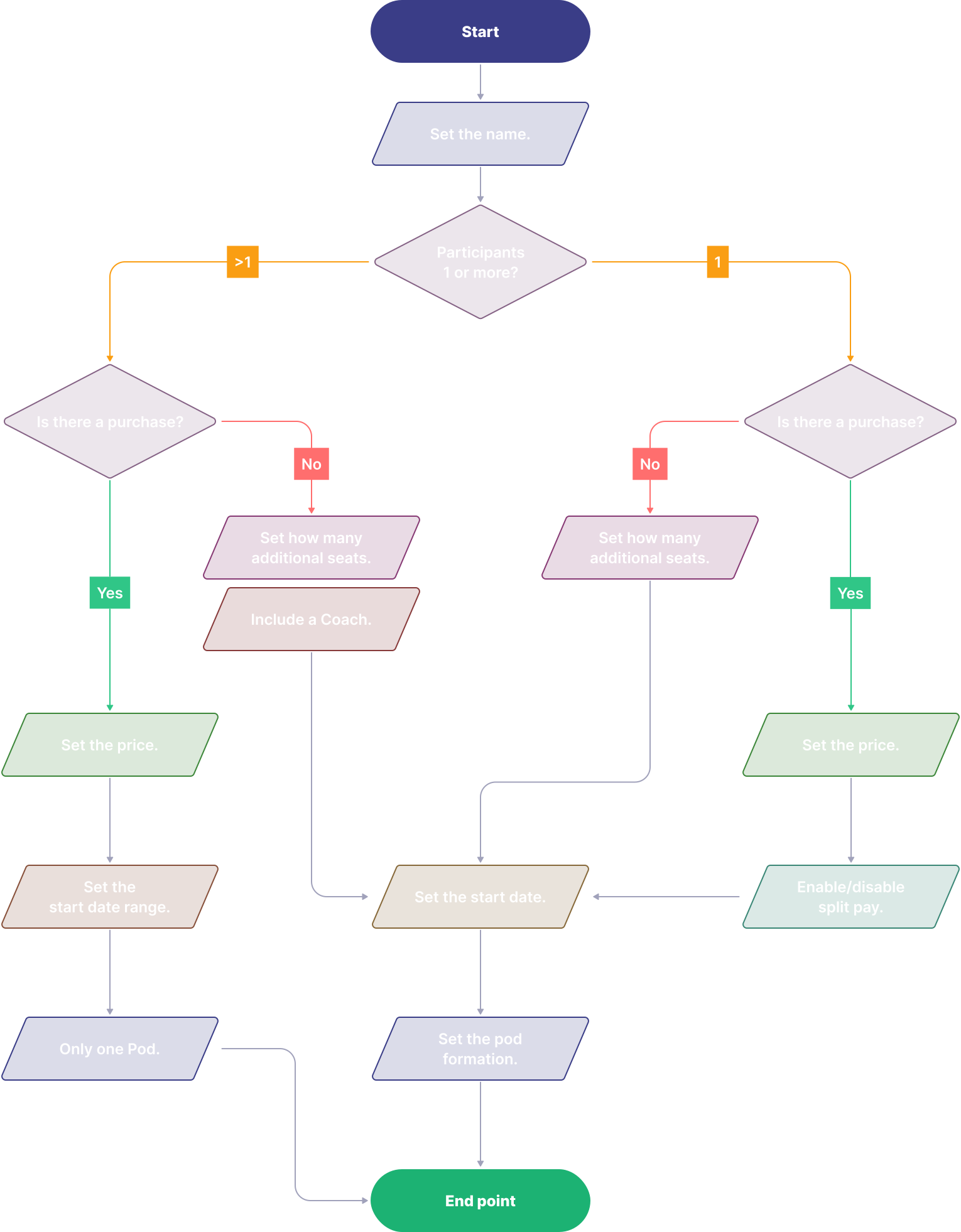
Form builder combinations
I combined all the modules and tested their interactions against existing use cases. This stage helped surface and resolve unforeseen edge cases. Together with my product manager, I conducted several interviews with Customer Success specialists using simple linear click-through prototypes.
On the left of the demo is a piece of the admin UI with form settings.
Conclusion

Key Lukin
Head of Product
Positive Intelligence
Building our automated enrollment flow was a turning point. We learned a lot from the process, and it opened up an entirely new source of revenue that simply wasn’t possible before.
500.000$
Revenue added first year
70%
Enrolment costs reduced
The new automated enrollment flow eliminated bottlenecks in purchasing programs for small and mid-sized teams, making it faster and easier to get started.
By balancing automation with flexibility, the solution unlocked new revenue streams, reduced manual overhead, and improved the overall customer experience. This project clearly demonstrated how thoughtful system design can directly drive growth and scalability.


Thanks for watching
tonitsojd@gmail.com